The Last Mile encompasses different agents, all of them participants in a complex ecosystem in which consumers, public administrations, the HORECA sector, e-commerce, retail, etc., are involved in its management and efficiency.
Proper Last Mile logistics management is one of the biggest challenges for stakeholders. The search for proper efficiency is key because, according to Deloitte, “the last mile represents 40% of total logistics costs”. It is a challenge to be faced immediately and continuously, in order to address the challenges it brings such as logistics efficiency, urban congestion and environmental sustainability.
What is the Last Mile?
These are the sectors that the consulting firm Deloitte has considered to have the greatest impact on cities, in relation to their logistics activity interrelated with their sectoral growth and the last mile impact it generates.
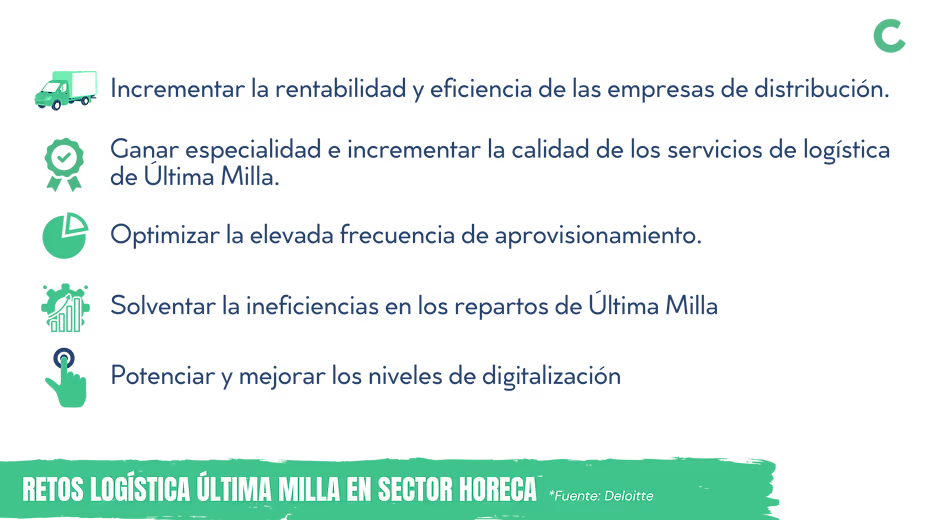
Large sector with around 376,000 establishments in Spain, which implies a great impact on Last Mile logistics due to the large number of establishments and the level of supplies required to carry out their activity.
It is a sector that suffers from great fragmentation of distributors; The supply that the HORECA sector needs daily means that establishments usually have at least 8 different distributors and require a high frequency of supply: it is a sector whose raw materials are based on perishable products, which is why it requires a high frequency of supply. constant supply. and some HORECA establishments receive merchandise up to 6 times a day. In addition, the suppliers in this sector are mostly the distribution companies themselves that do not have correct logistics planning.
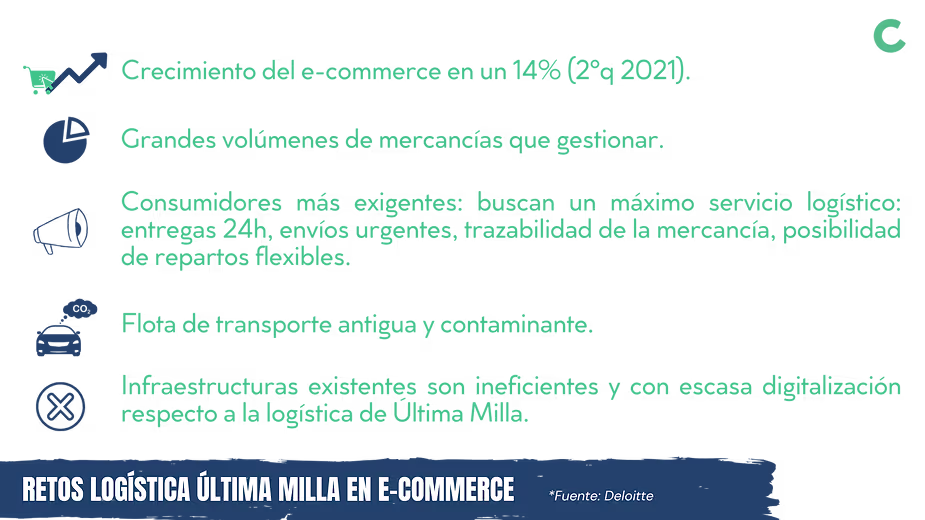
We are faced with a sector with high year-on-year growth and large volumes of merchandise. We divide the sector into:
Even dividing the sector, e-commerce experiences the following problems in relation to Last Mile logistics management:
So that these sectors (and others) can face the challenges posed by last mile logistics efficiently, we found an innovative and effective infrastructure and technology solution: Smart Lockers.
More establishments are now committed to promoting the use of smart lockers to manage the deliveries and collections of their products and thus opt for much more efficient and sustainable last mile logistics.
Smart lockers save parcel companies €0.8/package, thanks to the optimization and standardization of shipping routes and the elimination of failed deliveries (¼ failed delivery attempts).
Having this type of infrastructure and technology in strategic locations is key to this Last Mile logistics transformation that promotes more sustainable urban areas.



.png)