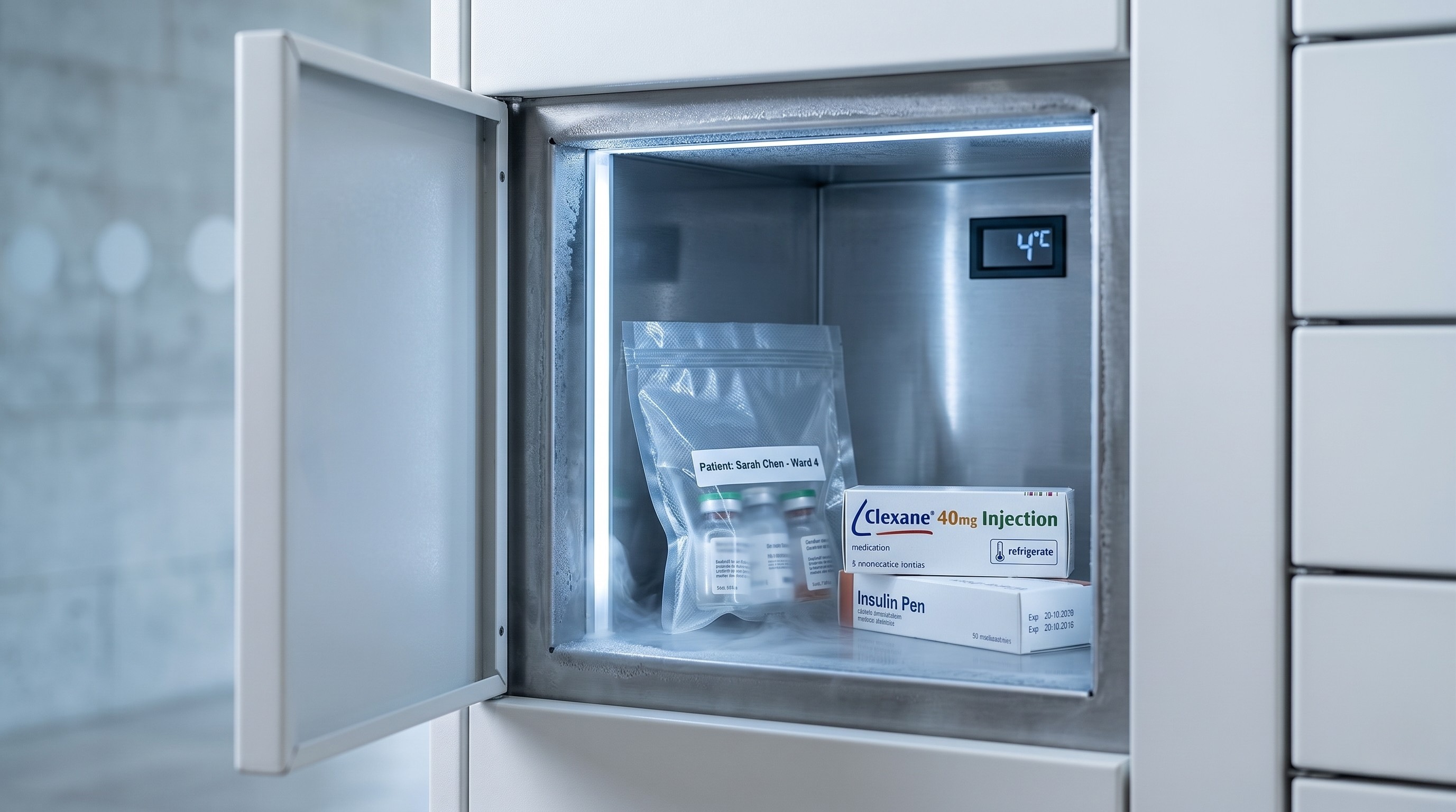
The cold chain has always been critical. But in 2026, "critical" has become "legally mandatory." New European Union food safety and pharmaceutical distribution regulations now require documented, end-to-end temperature traceability at every handoff point — not just during transport, but at storage, pickup, and last-mile delivery. For operators across retail, logistics, healthcare, and food service, the question is no longer whether to implement temperature monitoring. It is how fast you can close the compliance gaps before an inspection, an incident, or a product recall forces the issue.
This article breaks down what the 2026 regulatory framework demands, where most operations currently fail, and what technical infrastructure is now considered standard practice for compliant cold chain management.
Cold chain compliance refers to the set of documented processes, monitoring technologies, and verified records that prove a temperature-sensitive product was maintained within its required range — from origin to end recipient — without interruption or unverified gap.
In 2026, regulatory bodies across the EU (under updated General Food Law Regulation EC 178/2002 revisions, the Falsified Medicines Directive transposition updates, and the EU Digital Product Passport framework rollout) have expanded the definition of "documented traceability" to include:
According to data published by the European Food Safety Authority (EFSA) in early 2026, approximately 34% of cold chain failures in the EU still occur not during transport, but at the last-mile delivery and pickup stage — the precise moment where most legacy operations lack automated monitoring infrastructure.
Most cold chain operators have invested heavily in refrigerated transport: GPS-tracked vehicles, in-cab temperature sensors, carrier certifications. The gap is structural, not technological — it sits in the parts of the chain that were never designed to be monitored.
When a temperature-sensitive shipment reaches its final destination — a hospital receiving dock, a retail back-office, a food service building, a pharmaceutical dispensary — the digital trail frequently breaks. The package is signed for by a person, placed in a room, and retrieved by another person, often hours later. No sensor records what happened in between. No system logs the ambient temperature of the storage location. No timestamp proves when the product was collected.
Under 2026 regulations, this gap is no longer operationally acceptable. It is a compliance failure.
Many operations still rely on paper-based or manually entered temperature logs for in-facility storage. These carry three critical risks under the new framework:
A 2026 Gartner analysis of cold chain technology adoption found that 61% of non-compliance findings in EU inspections relate to documentation gaps rather than actual temperature excursions — meaning the product may have been fine, but the proof was missing.

In response to these regulatory requirements, a clear infrastructure model is emerging across compliant operations. It combines three layers:
Temperature-controlled storage units at delivery and collection nodes — not just transport containers — must now log ambient conditions continuously. In high-compliance sectors such as pharmaceutical and food service, this means purpose-built refrigerated infrastructure at the point of last-mile handoff, with sensors that log to a cloud-based system in real time.
The requirement is not that products are kept cold. It is that you can prove they were kept cold, at every moment, at every location.
Each physical transfer — deposit, storage, collection — must generate a timestamped, identity-linked digital record. This is not achievable with manual sign-off processes. It requires access-controlled systems that authenticate identity (via PIN, QR, NFC, or biometric) and automatically log the event to a centralised audit database.
In automated Smart Locker systems designed for cold chain use, this is a native function: every door opening, every deposit, every collection creates an immutable log entry — who, when, what temperature the compartment was at, and for how long the product was stored.
When a temperature excursion occurs — either through equipment failure or an extended collection window — the system must detect it, alert the responsible party in real time, and log the incident with the corrective action taken. This is the "incident response documentation" requirement that regulators are increasingly testing during audits.
According to McKinsey's 2026 Supply Chain Resilience Report, companies that have implemented automated cold chain monitoring at the last-mile stage report a 78% reduction in compliance-related incidents and a 42% decrease in product waste due to early excursion detection.
.png)
Organisations that have transitioned to automated, digital cold chain infrastructure at handoff points are reporting the following benchmarks:

These figures represent the operational gap that 2026 regulations are designed to close — and the business case for investment in compliant infrastructure is now inseparable from the regulatory case.
Pharmaceutical distribution and hospital pharmacies: The updated EU Falsified Medicines Directive transposition requires that temperature-sensitive drugs maintain documented cold chain integrity from dispensary to patient collection point. Hospital pharmacies operating automated dispensing systems without temperature logging at the collection stage are now in a grey compliance zone.
Food retail and grocery e-commerce: Click & Collect operations handling fresh and chilled products are now subject to the same traceability requirements as warehouse cold storage. Every collection point — whether a staffed counter or an unmanned locker unit — must generate a verifiable temperature record for the storage period.
Contract catering and food service: Operators delivering to unmanned or after-hours sites (corporate canteens, healthcare facilities, educational institutions) are increasingly audited on whether their delivery and collection points meet continuous monitoring standards, not just their transport vehicles.
Third-party logistics (3PL) and last-mile couriers: The EU's updated framework places joint liability on logistics operators for traceability gaps at delivery. 3PLs deploying OOH (out-of-home) delivery networks with temperature-sensitive products must now certify that their collection points meet the same monitoring standards as their transport infrastructure.
What does cold chain compliance require in 2026 under EU regulations?EU cold chain compliance in 2026 requires continuous temperature logging at every handoff point — including last-mile delivery and collection — along with digital audit trails accessible on demand and documented incident response procedures. Compliance now extends beyond transport to in-facility and collection-point infrastructure.
What is temperature traceability and why is it legally required?Temperature traceability is the ability to prove, with documented, timestamped records, that a product was maintained within its required temperature range at every point in the supply chain. In 2026, EU food safety and pharmaceutical regulations have made this a legal obligation, not a best-practice recommendation.
What happens if a company cannot provide temperature traceability records during an audit?Under the updated EU framework, failure to produce complete digital temperature records during a regulatory inspection can result in product recall orders, facility suspension, financial penalties, and in the pharmaceutical sector, revocation of distribution licences. The 2026 regulations treat missing documentation as equivalent to a confirmed excursion event.
Where do most cold chain failures actually occur?According to EFSA data from 2026, approximately 34% of cold chain failures occur at the last-mile delivery and collection stage — not during transport. This is typically where operations lack automated monitoring infrastructure, making it the highest-risk compliance gap.
Are smart lockers compliant with cold chain regulations? Smart lockers designed with integrated refrigeration (2–8°C compartments), continuous temperature logging, access-controlled handoffs, and cloud-based audit trail generation meet the technical requirements of the 2026 EU cold chain compliance framework. The critical factors are continuous monitoring, digital identity verification at each access event, and on-demand exportable logs.
What is the ROI of implementing automated cold chain monitoring?Beyond regulatory compliance, organisations report a 42% reduction in product waste, a 78% reduction in compliance incidents, and a measurable reduction in insurance and liability costs. For last-mile operations, automated collection points also reduce failed delivery rates by up to 47%, directly improving route economics.