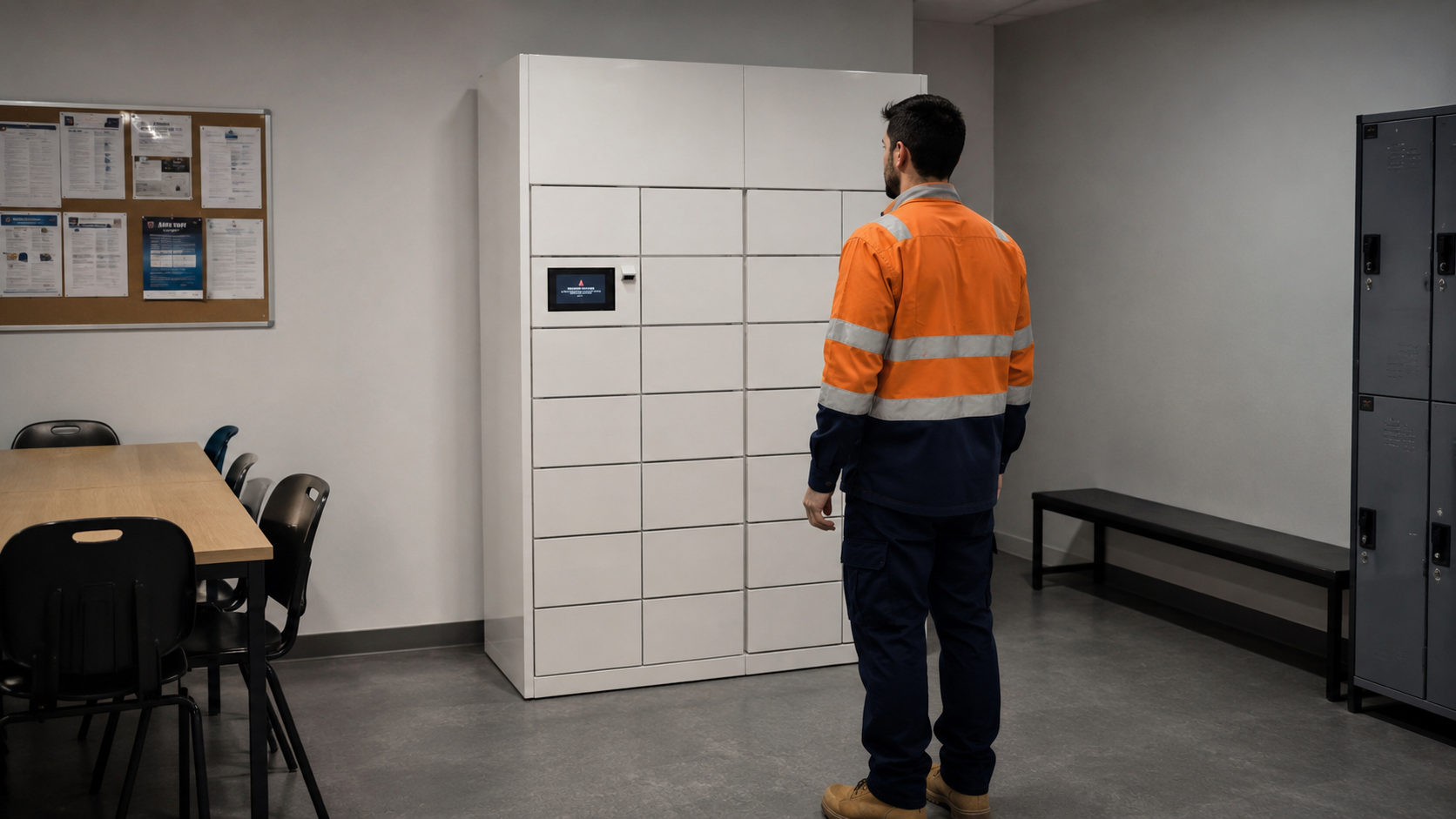
It's 2:40 a.m. on a continuous-process line. The canteen closed at 4 p.m. The night shift has a vending machine with crisps and a coffee that tastes like the machine. For a plant running 24/7, food access is not a perk — it's a fatigue, retention and safety variable. Yet collective catering was built around a fixed lunch service that assumes everyone eats between 1 and 3 p.m. Shift-based industrial sites break that assumption every single night. This article looks at why feeding shift workers keeps failing at industrial sites, what an unattended canteen actually is, and how temperature-controlled food lockers close the gap — including the part most people get wrong: avoiding waste.
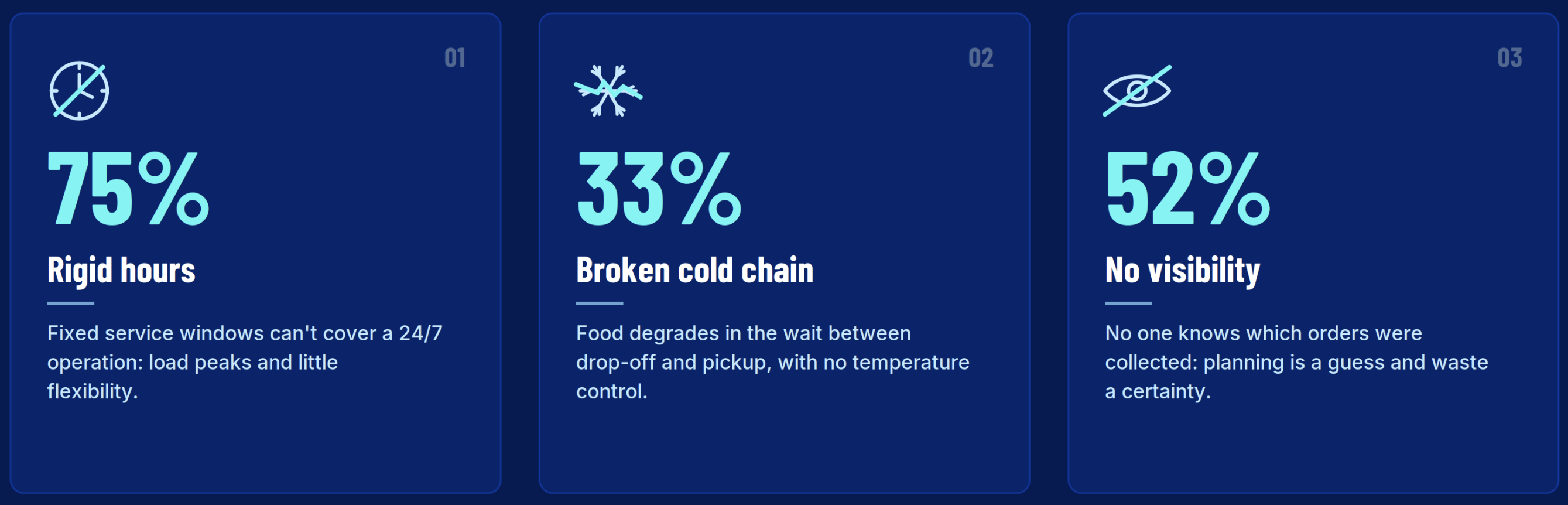
The core problem is a timing mismatch: catering operates on fixed windows, industrial operations don't. A continuous plant has people eating at 2 a.m., 6 a.m. and across rotating turnos that no single service window covers. When you force a fixed-hour model onto a 24-hour operation, three things break.
First, the cold chain. Prepared food left in a common fridge or on a tray waiting for a shift that eats hours later is food that degrades. In collective catering, a meaningful share of quality loss happens not in transport but in the wait — the gap between when food is dropped and when it's collected. Without temperature control during that gap, you're serving a worse meal or throwing it away.
Second, visibility. Once food is placed in a shared area, no one knows what's been collected, by whom, or what's still sitting there. Operations teams routinely have no reliable read on which orders were actually picked up, which makes demand planning a guess and waste a certainty.
Third, the human cost. Queues at peak windows, dependence on a staffed counter, and "go find your tray in the breakroom" experiences generate complaints and erode the perceived quality of an otherwise good catering service. For an HSEQ or facility lead, a fed, rested night shift is an operational metric, not a soft one.
Columat operational data across catering deployments points to the same pattern: rigid service hours create load peaks and low flexibility, a third of quality loss traces to broken cold chain during the wait, and most operations lack visibility over what's been collected.
An unattended canteen (or comedor desatendido) is a food service model where meals are delivered, stored and collected through automated, temperature-controlled points — without a staffed counter present at the moment of pickup. The catering provider produces and stocks; the worker collects whenever their shift allows; the system keeps the food at safe temperature and logs every movement.
This is a structural shift in collective catering, not a vending upgrade. Vending sells shelf-stable products at ambient temperature. An unattended canteen delivers prepared, fresh or chilled meals — the actual catering output — across a 24-hour window, with the cold chain (2–8 °C, frozen, or controlled heat) maintained from drop to pickup. The relevant technology here is the temperature-controlled smart locker: modular compartments that hold meals at a guaranteed temperature, release them against a QR or PIN, and report state in real time.
The model only works because it is asynchronous. The worker doesn't bend to the service window; the service window disappears. That's the entire point for a turno-based operation.
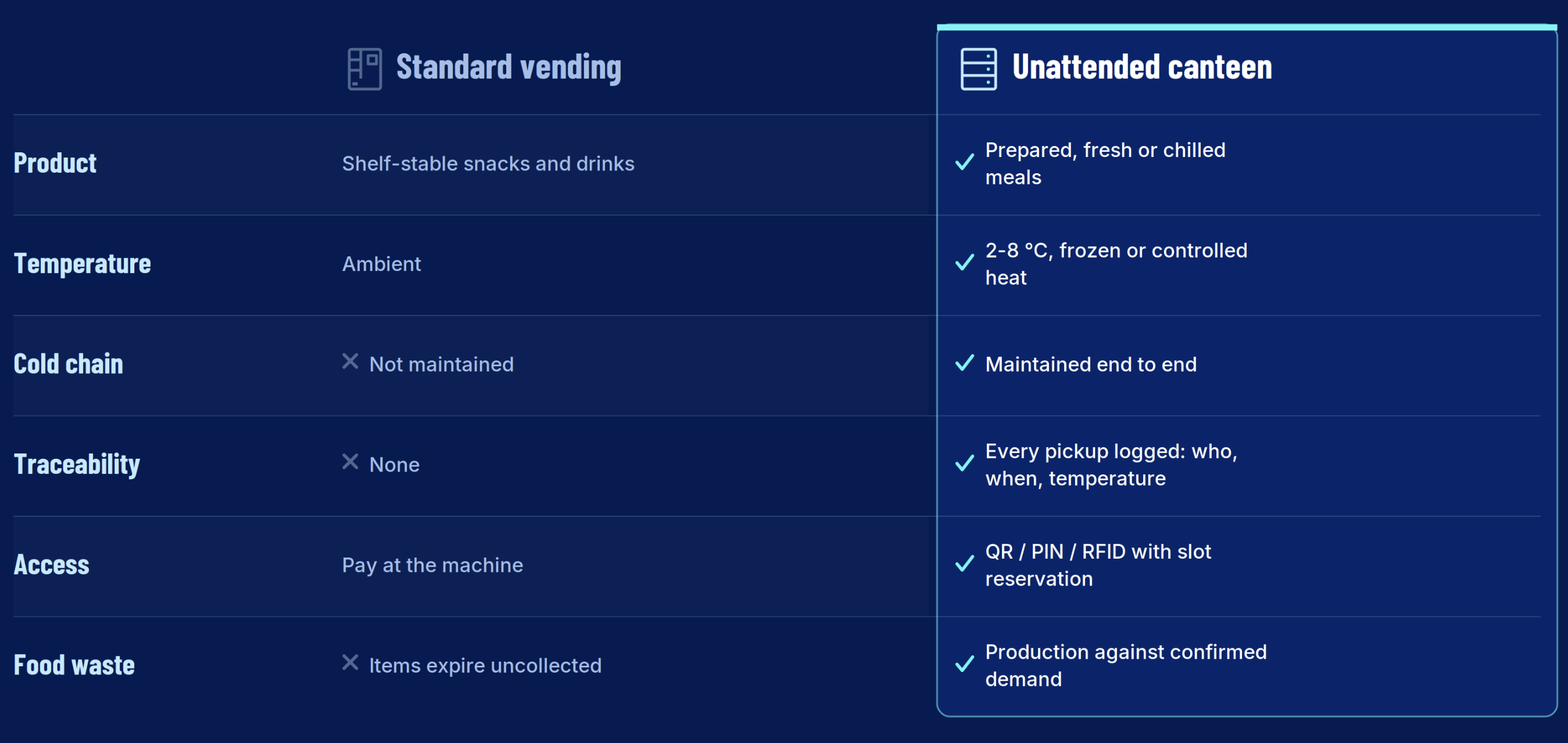
For a 24/7 plant, the practical choice is between three options: leave the night shift with ambient vending, build out staffed coverage across all shifts (rarely justifiable), or deploy a temperature-controlled, reservation-based food locker. The locker only wins if it solves the objection every operations lead raises first: if I stock food at 6 p.m. for a shift that eats at 2 a.m., how much do I throw away?
The answer is reservation by time slot. You don't stock what nobody ordered. Workers reserve a meal for their shift window; the catering provider produces and loads against confirmed demand; the worker is notified when their meal is in the locker. This inverts the waste logic: instead of producing for an estimated headcount and discarding the gap, you produce for confirmed pickups. Combined with controlled temperature during the wait and a logged collection, the merma problem — the single reason most "food in the breakroom" schemes fail — is structurally addressed rather than tolerated.
A workable setup for an industrial site has four elements: temperature-controlled compartments (refrigerated 2–8 °C for fresh, plus controlled-heat or frozen as the menu requires); reservation by shift window so production matches demand; contactless access by QR, PIN or the same RFID/NFC credential the operator already uses for site access; and integration so collection events feed back into the catering provider's planning and the site's own systems. The catering provider optimizes routes and cuts failed drops; the plant removes a staffed dependency; the worker eats a properly conserved meal on their own schedule.
The outcomes a temperature-controlled, reservation-based model should move, based on Columat deployments across cold-chain and catering use cases:
For the catering provider, the gains are route optimization, fewer failed deliveries and a maintained cold chain per drop. For the plant, it's removing the night-shift food gap without adding headcount. The before/after is stark: from a fixed lunch service plus ambient vending, to a 24-hour food point with guaranteed temperature, confirmed-demand production and a full audit trail.
.png)
How do you feed night-shift workers when the canteen is closed? Through a temperature-controlled food locker stocked by the catering provider against shift reservations. Workers collect their meal whenever their shift allows, with the cold chain (2–8 °C) maintained and every pickup logged.
Do unattended food lockers cause food waste? Not when they run on reservation by time slot. Production matches confirmed pickups rather than an estimated headcount, so you stock what's actually ordered instead of discarding the gap — which is the opposite of the "food left in the breakroom" model.
What temperature do refrigerated food lockers hold? Fresh and chilled meals are held at 2–8 °C; frozen and controlled-heat compartments are available for menus that need them, with continuous monitoring and alerts.
Is this the same as a vending machine? No. Vending sells shelf-stable products at ambient temperature. An unattended canteen delivers prepared, fresh or chilled meals — the catering provider's actual output — across a 24-hour window with the cold chain maintained.
How do workers access their meal securely? Contactless, via QR, PIN, or an RFID/NFC credential — often the same badge used for site access — with each access recorded for full traceability.